
What players say
Quick Count Challenge keeps its scope narrow: one equation, several answer choices, and a countdown. That focus is its main strength, because nothing distracts from mental calculation. The difficulty curve moves from addition and subtraction into multiplication, division, and mixed operations at a pace that suits beginners and keeps experienced players engaged. The lack of accounts, downloads, and intrusive ads makes it practical for classrooms and family use. The main limitation is that the core loop never changes, so players seeking variety or narrative may lose interest quickly.
About this game
How a Round Works
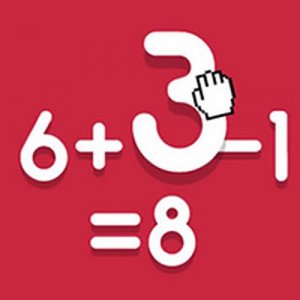
Every puzzle in Quick Count Challenge presents one arithmetic equation with either a missing number or a missing result. Below the equation, several answer options appear. You select the one you believe is correct before the timer runs out. A correct choice adds points and advances the game. A wrong choice either reduces the remaining time or subtracts points, so guessing carelessly carries a real cost. The layout shows one puzzle at a time, keeping the screen free of distractions. [IMG_1]
Difficulty Curve and Operations
The game opens with basic addition and subtraction. As you progress, multiplication and division enter the mix. Later stages combine multiple operations and use larger numbers. Each level is a small step up from the last, which lets newcomers build confidence without hitting a sudden wall. Players who return regularly tend to see reaction times and accuracy improve together, because the time pressure rewards both speed and correctness.
Interface and Accessibility
Bright, high-contrast colors keep numbers readable. Buttons are sized for touch screens, and the layout adapts to both desktop and mobile browsers. Nothing needs to be downloaded or installed. Sound effects are optional and can be muted for quiet play. The design avoids clutter, so the only thing competing for your attention is the equation itself. [IMG_2]
Who It Suits
Quick Count Challenge contains no violence, no inappropriate themes, and no advertisements that might disturb younger players. Parents can let children play unsupervised. The format also works for group play, where family members or classmates take turns solving puzzles and comparing scores. Because there is no fixed endpoint, sessions can last two minutes or much longer, depending on how much time you have.
Compatibility
FAQ
Player Comments
Sign in to comment
You must be logged in before posting a review or rating.
No comments yet. Be the first to comment!


Editorial Notes