
What players say
Tile Stack Match Puzzle is a strategy puzzle about placing falling tiles to clear rows and columns. Its four modes—Classic, Timed, Puzzle, and Endless—change how much time and planning each move requires. Bright colors and subtle animations keep the grid readable, while the gentle difficulty curve welcomes beginners. The main limitation is that the input does not describe multiplayer or online features, so it appears to be a single-player experience.
About this game
Placing Tiles on the Grid
Tile Stack Match Puzzle centers on a simple action: a tile falls, and you choose where it lands on the grid. Each tile has a distinct shape and color, so placement is never arbitrary. Filling an entire row or column removes those tiles and frees space. The grid starts mostly empty, which gives newcomers room to experiment, but as tiles accumulate, the margin for error shrinks and the pace quickens. The challenge is not just clearing lines but doing so without blocking future placements.
Four Modes, Four Pressures
The game offers four distinct ways to play. Classic mode removes the clock and focuses on building the highest score. Timed mode adds a countdown, forcing faster decisions. Puzzle mode presents specific tile arrangements that must be cleared in a set number of moves, which shifts the emphasis to logical planning. Endless mode removes the score cap, so sessions continue as long as you can keep the grid clear. Each mode changes how you weigh the same core decision: clear a line now or save space for a larger tile.
[IMG_1]Reading the Board at a Glance
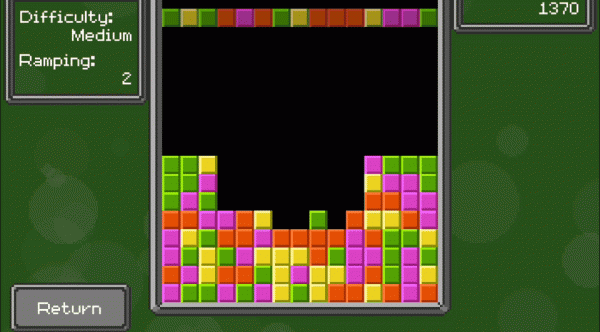
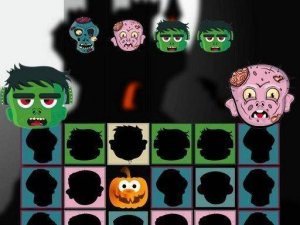
Bright, saturated colors distinguish each tile, making the grid easy to scan during fast play. Subtle animations accompany line clears, providing satisfying feedback without pulling attention away from the next placement. Upbeat background music stays unobtrusive, and sound effects for placing tiles and clearing lines are crisp. This combination supports focus during longer sessions, especially in Endless mode where the grid state changes constantly.
Planning Ahead, Not Just Reacting
Success depends on anticipating how each tile affects future placements. Weighing the benefit of an immediate clear against the cost of a cramped grid is the central strategic tension. Regular players develop pattern recognition and spatial reasoning as they play. The difficulty curve is gentle at first, allowing beginners to build confidence, but it eventually requires careful planning to avoid gridlock. There is no complex menu system or lengthy tutorial; you drag a tile to a desired position and release. That simplicity makes the game approachable for younger players and those new to puzzle games, while the strategic elements keep experienced players engaged.
Compatibility
FAQ
Player Comments
Sign in to comment
You must be logged in before posting a review or rating.
No comments yet. Be the first to comment!






Editorial Notes