
What players say
Sculpting Colored Block Art is built around a single, well-defined loop: match a numbered block to its palette color and fill it, either by tapping or holding. The absence of timers and scores makes it genuinely restful rather than a disguised challenge. The category structure, covering animals, vehicles, and foods, gives the gallery enough range to keep the activity from feeling like one long worksheet. Its main limitation is that the input describes no progression system, rewards, or multiplayer features, so players seeking goals beyond completion may find it too slight.
About this game
Building Models Block by Block
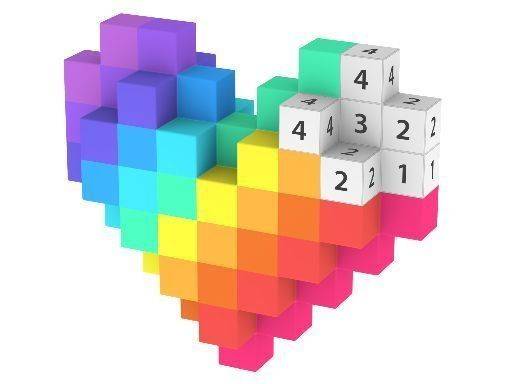
Sculpting Colored Block Art takes the familiar numbered coloring page and gives it volume. Every design is assembled from many small blocks, and each block carries a number tied to one color in the palette. The player's job is to fill those blocks correctly, gradually turning a flat grid of numbers into a finished 3D model. There are no hidden rules beyond that match: number on block, number on palette.
Tap, Hold, and Fill
After choosing a design from the gallery, the interface shows a color palette where every color is labeled with a number. Selecting a color and tapping a matching block fills it instantly. Holding a finger down continues filling all blocks of that same number, which speeds up larger areas without turning the activity into a race. This tap-and-hold control works the same way on any device, so the game does not demand precise input or fast reflexes.
Design Categories and Themes
Available models are grouped into categories such as animals, vehicles, and foods. Each category holds multiple designs, so the gallery offers a reason to return after finishing one model. The variety also changes the shape of the work: an animal design may have broad rounded sections, while a vehicle design tends to include straighter lines and smaller detail blocks. Choosing a category becomes a mood decision as much as a visual one.
Pacing Without Pressure
There are no timers, scores, or fail states. A model can be left and resumed whenever the player wants, and the only measure of progress is how many blocks have been filled. That structure suits children and adults looking for a quiet creative task rather than a challenge. Completion brings a mild sense of accomplishment, mostly from seeing scattered numbers resolve into a recognizable object.
Compatibility
FAQ
Player Comments
Sign in to comment
You must be logged in before posting a review or rating.
No comments yet. Be the first to comment!








Editorial Notes