
What players say
Classic Sudoku Logic Puzzle delivers exactly what its name promises: a 9x9 number-placement challenge solved through deduction. The absence of downloads, accounts, and intrusive ads makes it easy to start. Its family-friendly design suits casual solvers and beginners, while the single-solution guarantee rewards careful scanning over guessing. The main limitation is that difficulty options and timers are not guaranteed, so players seeking structured progression may find the experience minimal. Overall, it is a reliable choice for short mental breaks.
About this game
What You Actually Do
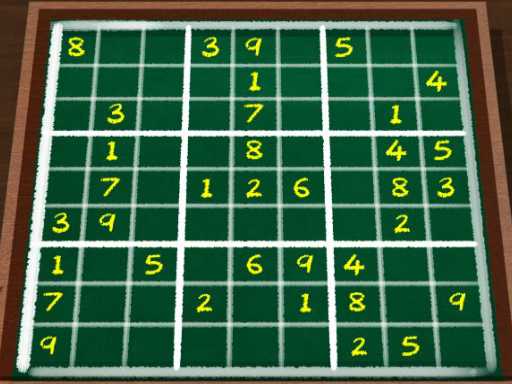
Classic Sudoku Logic Puzzle hands you a 9x9 grid with some cells already filled. Your job is to complete the empty cells using the digits 1 through 9. Three constraints govern every placement: no digit repeats in a row, no digit repeats in a column, and no digit repeats within any of the nine 3x3 blocks. Because each puzzle has a single correct solution, guessing is unnecessary—and often counterproductive. The game rewards careful scanning over trial and error.
How a Move Works
Select an empty cell, then choose a number from the provided set. That is the entire control scheme. The challenge comes from reading the grid: examining rows, columns, and blocks to find cells where only one digit can legally fit. Beginners can start with simpler grids and move to harder ones as deduction skills sharpen. The clean interface keeps attention on the numbers rather than menus or timers.
Designed for Mental Warm-Ups
Sessions can be short or long, depending on the puzzle. The game is family-friendly, runs in a browser without downloads or account creation, and supports concentration and pattern recognition. Difficulty options or a timer may be available, though the core experience remains relaxed and logic-driven rather than competitive.
Solving Habits That Help
Scan each row, column, and block systematically to spot missing digits. Fill cells where only one number fits before moving on. Cross-checking between a row and its intersecting blocks often reveals placements that a single-line scan misses. If a puzzle stalls, stepping away briefly and returning with fresh eyes frequently exposes the next deduction. Noting candidate numbers in empty cells is a common next step for tougher grids.
✅ Compatibility & Testing
FAQ
Player Comments
Sign in to comment
You must be logged in before posting a review or rating.
No comments yet. Be the first to comment!









Editorial Notes